
Video showing students and faculty in the Materials Science and Engineering department engaged in research, lab work, and classroom activities.
Home of UT
Materials Science and
Engineering
Core Faculty
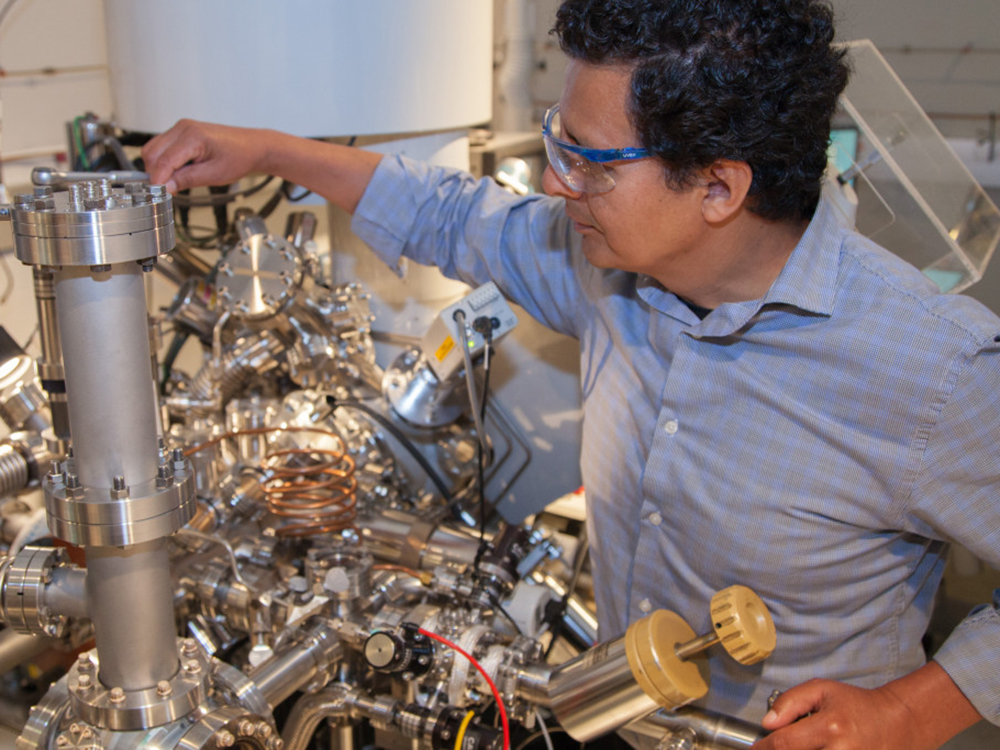
TMI's core faculty lead cutting-edge research by running their grants through the institute, fostering collaboration and resource sharing.
Learn More
Graduate Program
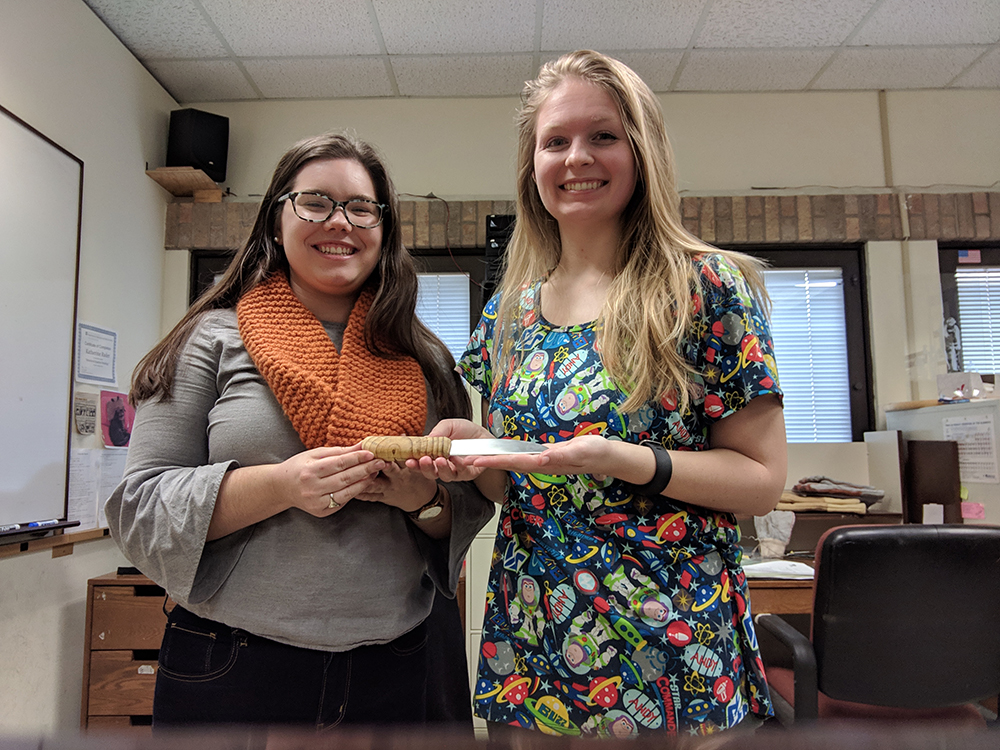
Our Materials Science and Engineering program is one of the best in the nation, and our graduates go on to be leaders in their fields.
Learn More
Research
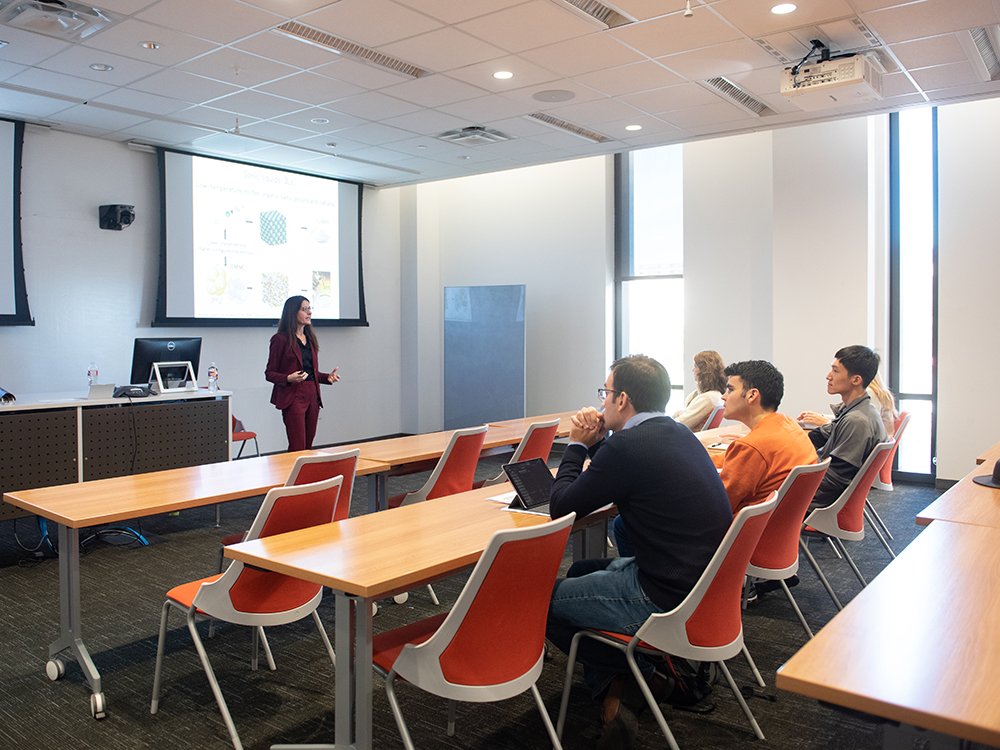
TMI supports interdisciplinary research at UT Austin, with over 100 faculty focusing on clean energy, nanotechnology, and advanced materials using our state-of-the-art facilities.
Learn More
Home
Solar Cells Testing Glovebox
Information the Equipment Can Provide
Coming soon
Fees and Policies
Cleanroom Entry fee: (The cleanroom entry fee is charged in addition to the cleanroom facility usage fee)
- UT Users: $6
- Higher Education/State Agencies: $10
- Corporate/External Users: $10
Cleanroom Facility
- UT Users: $35/hour
- Higher Education/State Agencies (Assisted): $92/hour
- Corporate/External Users (Assisted): $94/hour
- Higher Education/State Agencies (Unassisted): $64/hour
- Corporate/External Users (Unassisted): $65/hour
To become a new user of this facility, please read the Instrument Reservation Information page. If you are already a user you can make a reservation in FBS.
To become a user of this instrument you must first complete the Cleanroom Safety Class. Please contact the facility manager to schedule a training session.
Cambridge Nanotech Savannah TM200 ALD
Instrument Capabilities
The Cambridge Nanotech Savannah TM200 is an atomic layer deposition (ALD) system designed to deposit thin, highly conformal films with precise thickness control. The system is well suited for applications including high-k dielectrics, passivation layers, barrier coatings, and transparent conductive oxides.
System Characteristics
- Deposition temperature: 100–250 °C (low- to mid-temperature range)
- Wafer capacity: Accommodates wafers up to 6 inches
- Carrier gas: N₂ (nitrogen)
Available Precursors
The following precursors are currently available for use in the system:
- Trimethylaluminum (TMA): Used for deposition of Al₂O₃ (aluminum oxide)
- Tetrakis(methylamino)hafnium (TDMAH): Used for deposition of HfO₂ (hafnium oxide)
- Water (H₂O): Used as the reactant/co-reactant for oxide deposition
Fees and Policies
- UT Users: $35/hour
- Higher Education/State Agencies (Assisted): $92/hour
- Corporate/External Users (Assisted): $94/hour
- Higher Education/State Agencies (Unassisted): $64/hour
- Corporate/External Users (Unassisted): $65/hour
A cleanroom entry fee will be charged in addition to the cleanroom facility usage fee.
- UT Users $6
- Higher Education/State Agencies: $10
- Corporate/External Users: $10
Traning
Please contact Dr. Raluca Gearba and/or James Smitherman to schedule a training session.
Linseis Thermoelectric System
Instrument Capabilities
The Linseis LSR-3 is a fully integrated thermoelectric characterization system designed to measure the key transport properties required to evaluate thermoelectric materials.
Key Features:
- Simultaneously measures Seebeck coefficient and electrical resistivity of thermoelectric materials over a wide temperature range.
- Supports automated measurements under vacuum, inert gas, or controlled atmosphere conditions.
- Characterizes bulk materials, pellets, thin films, and advanced energy materials.
- Provides essential electrical transport properties for calculating the thermoelectric figure of merit (ZT) when combined with thermal conductivity data.
Fees and Policies
- UT Users: $20/hour
- Higher Education/State Agencies: $90/hour
- Corporate/External Users: $95/hour
Traning
Please contact Dr. Raluca Gearba and/or James Smitherman to schedule a training session.
SF-100 Lightning Maskless Photolithography
Instrument Capabilities
The SF-100 Lightning is a fast and flexible maskless sub-micron resolution lithography system which projects digital patterns directly onto photoresist, eliminating the need for physical photomasks. It provide rapid prototype of new designs and ideas without costly photomasks. It can also expose features over the entire area of the stage movement.
Key features:
- LED exposure wavelengths: 365 nm, 385 nm, and 405 nm, compatible with most standard positive and negative photoresists.
- Large-area exposure with automatic stitching across the stage travel.
- Integrated CCD camera for live viewing, supporting auto focus and level-to-level alignment.
- Fully automated XYZ stage provides one-button operation and auto stitching for large substrates.
Fees and Policies
- UT Users: $35/hour
- Higher Education/State Agencies (Assisted): $92/hour
- Corporate/External Users (Assisted): $94/hour
- Higher Education/State Agencies (Unassisted): $64/hour
- Corporate/External Users (Unassisted): $65/hour
A cleanroom entry fee will be charged in addition to the cleanroom facility usage fee.
- UT Users $6
- Higher Education/State Agencies: $10
- Corporate/External Users: $10
Traning
Please contact Dr. Raluca Gearba and/or James Smitherman to schedule a training session.
Page 4 of 54
Texas Materials Seminar Series
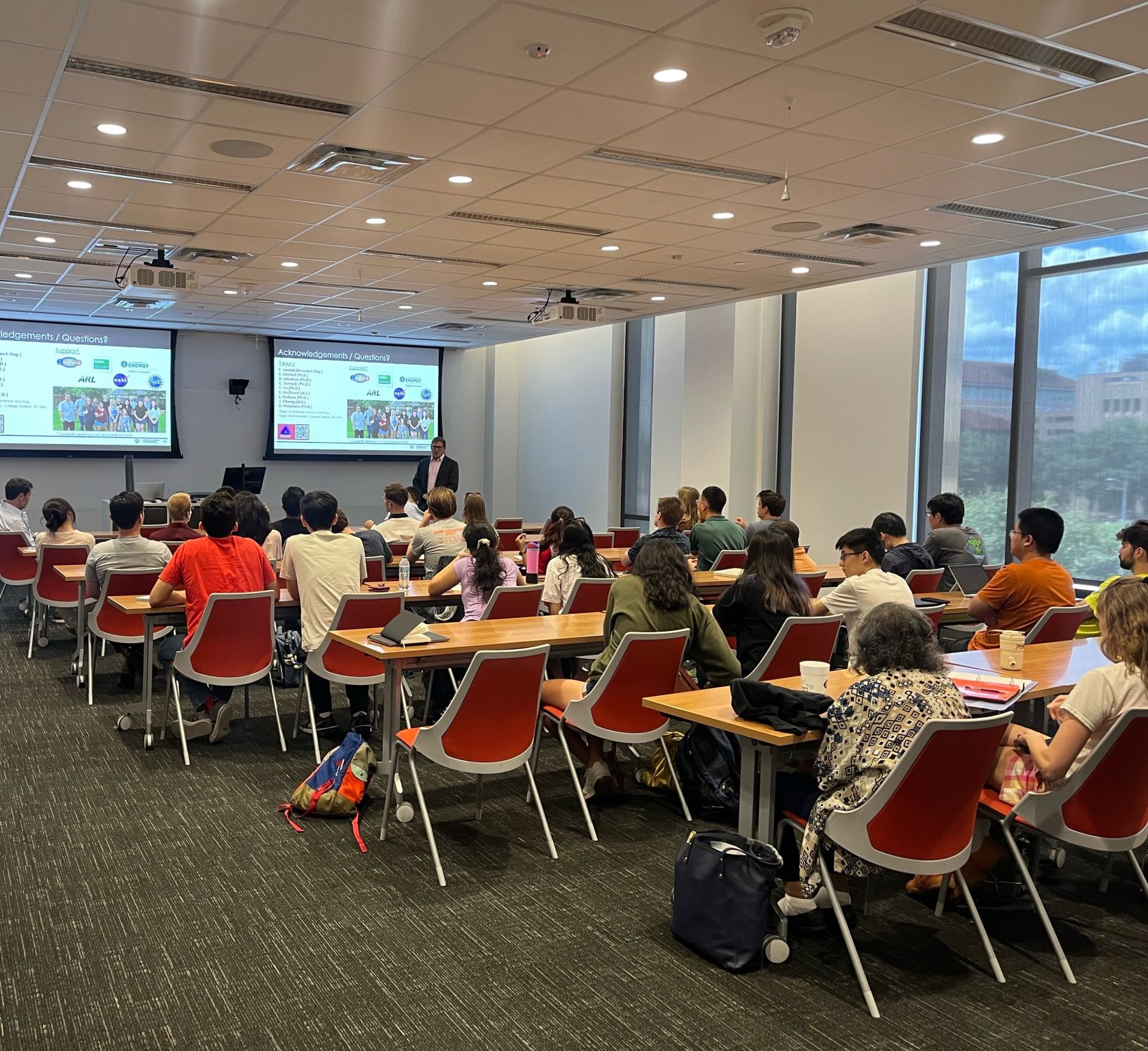
The Texas Materials Seminar Series features MSE 397 Seminars, TMI Distinguished Lectureships, and TMI Special Seminars, where leading faculty and professionals from around the world share cutting-edge innovations and advancements in materials engineering with our students.
Learn More
$12M+
In Grant Funding
20+
Research Patents
10K+
Sq. Ft. of Research Labs
News
Zhantao Chen Publishes New Article on AI-assisted Tool
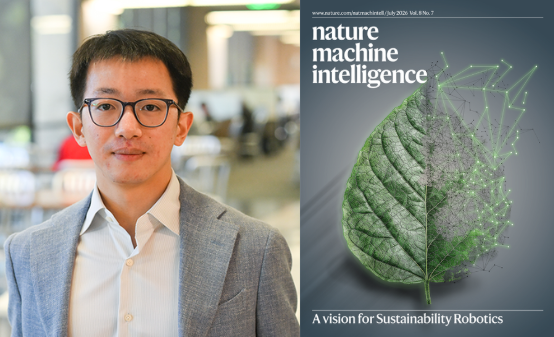
Zhantao Chen, an Assistant Professor in Mechanical Engineering and a TMI-affiliate, has published an article on an AI tool in Nature Machine Intelligence. The article used AI to help researchers in ways that would assist in experimental tasks that are often labor-intensive and tiresome.
Terry Zheng & Yu Group Publish New Work on Water-Based Electrolytes
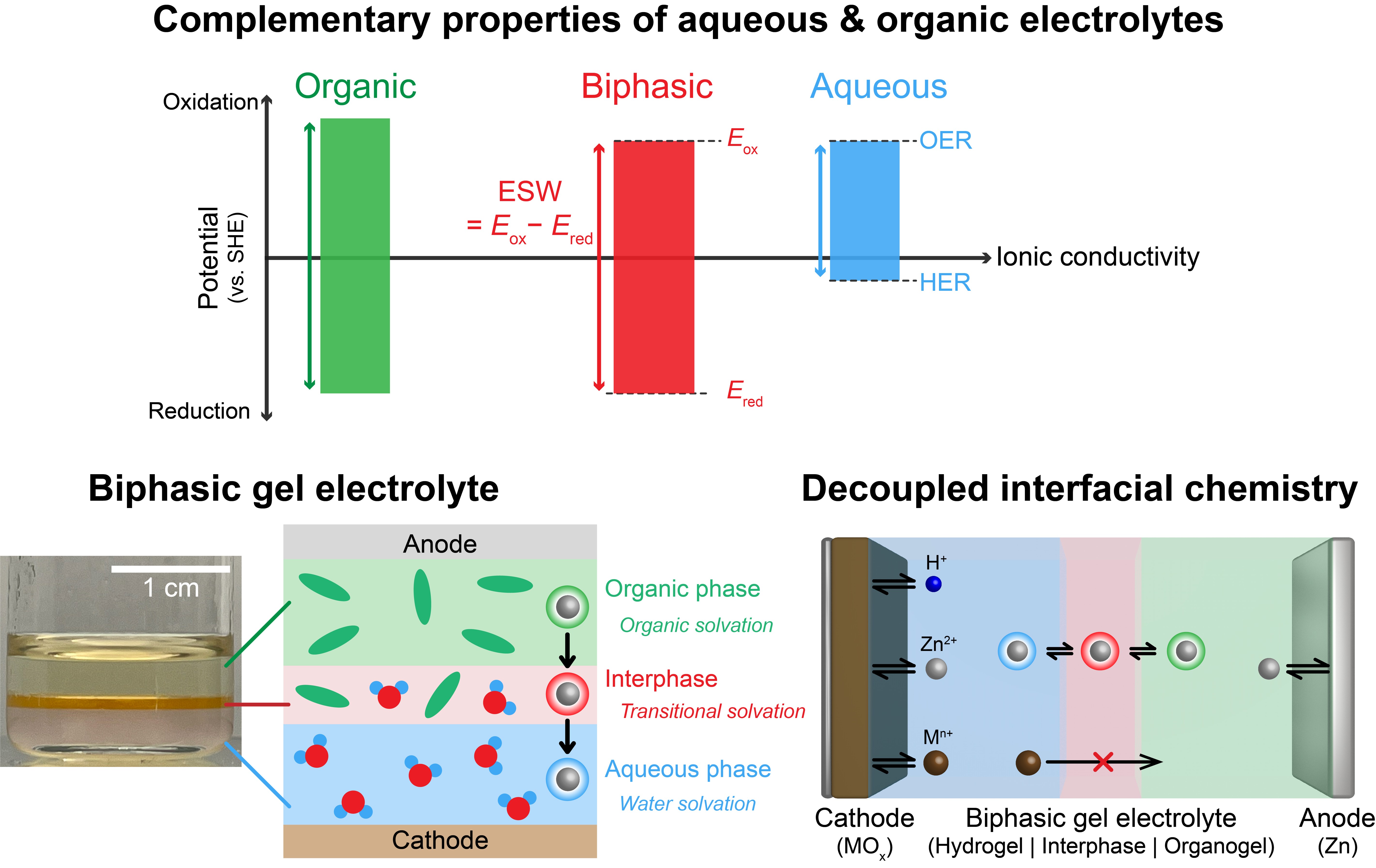
Materials Science and Engineering graduate student Tianrui (Terry) Zheng, under the supervision of Dr. Guihua Yu has published research in Advanced Materials introducing a biphasic electrolyte architecture that combines the strengths of water-based (aqueous) and organic-based electrolytes for long-duration, high-rate zinc metal batteries.
Get Better Sleep With Ultrasound Patch That Boosts REM Rest
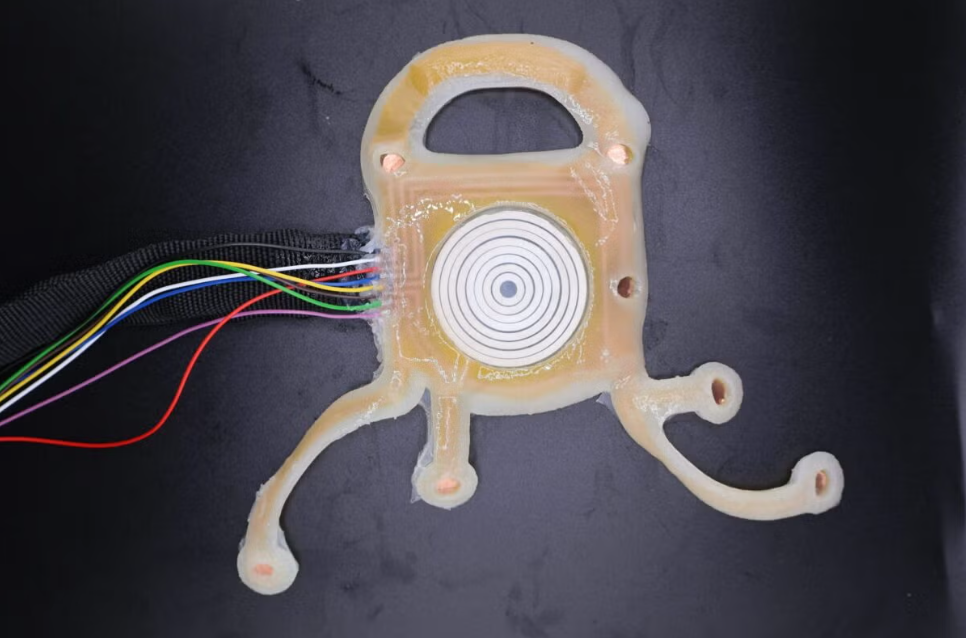
A wearable bioelectronic device increased REM sleep in real-world trials, without invasive surgery or medication.
Published by UT News.
Yuebing Zheng Awarded 'New Directions' Seed Funding from UT OVPR

Yuebing Zheng was awarded seed funding through the University's Office of the Vice President for Research, Scholarship and Creative Endeavors. The 'New Directions in Research' grants are one time payments that give faculty an opportunity to obtain proof-of-concept or pilot data for future, larger grants.
Terry Zheng Awarded UT Chevron Energy Graduate Fellowship
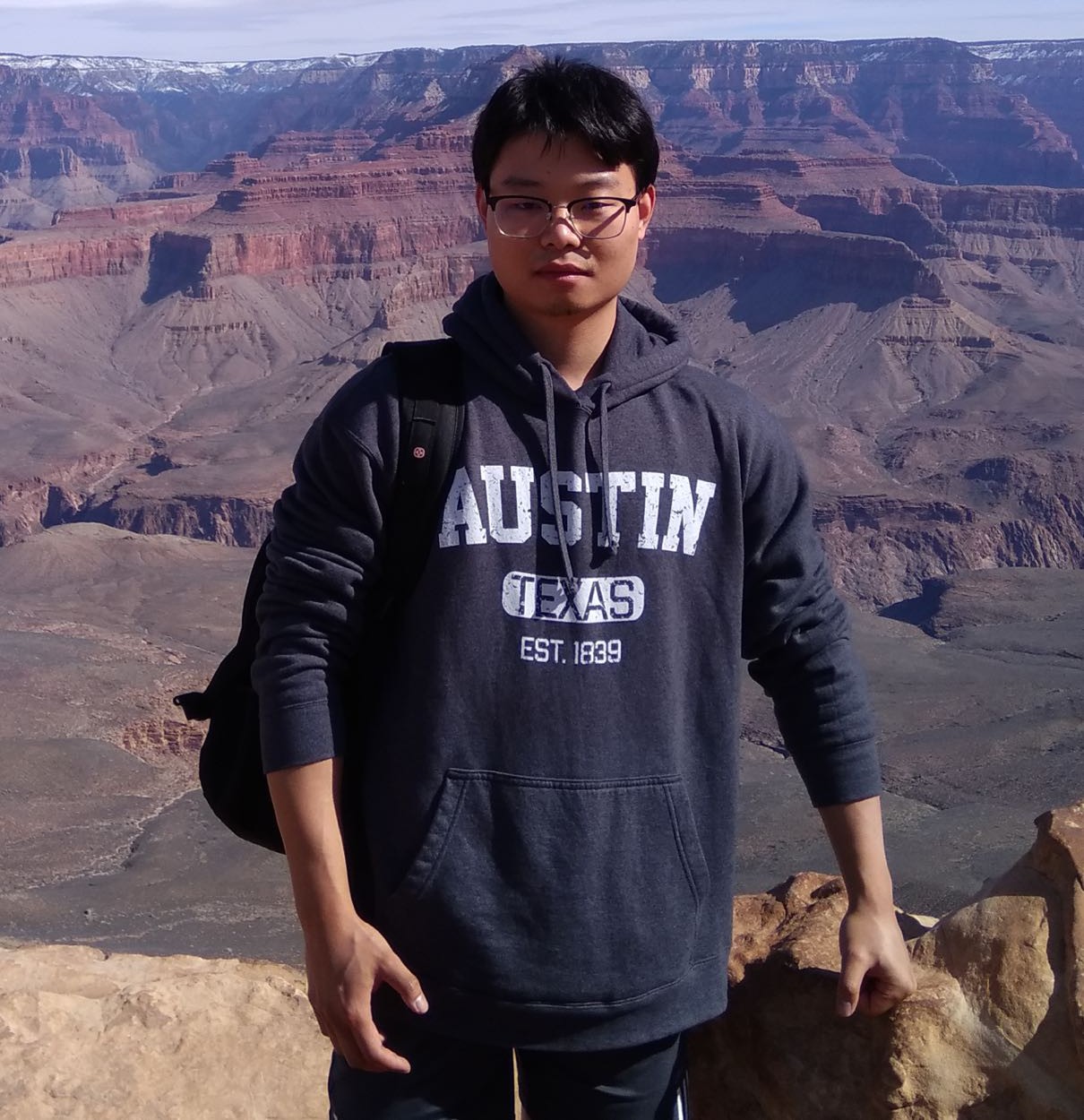
Tianrui (Terry) Zheng, a Materials Science & Engineering graduate student working with Dr. Guihua Yu, is a recipient of the 2026-2027 UT Chevron Energy Graduate Fellows Award from UT's Energy Institute.
