
Video showing students and faculty in the Materials Science and Engineering department engaged in research, lab work, and classroom activities.
Home of UT
Materials Science and
Engineering
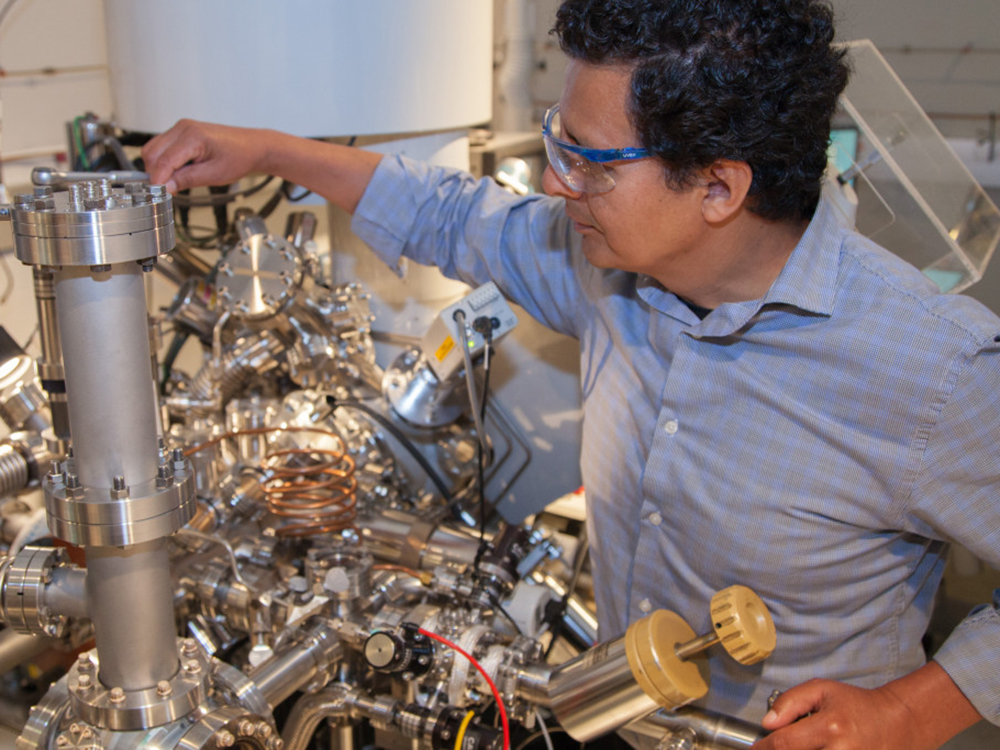
Core Faculty
TMI's core faculty lead cutting-edge research by running their grants through the institute, fostering collaboration and resource sharing.
Learn More
Graduate Program
Our Materials Science and Engineering program is one of the best in the nation, and our graduates go on to be leaders in their fields.
Learn More
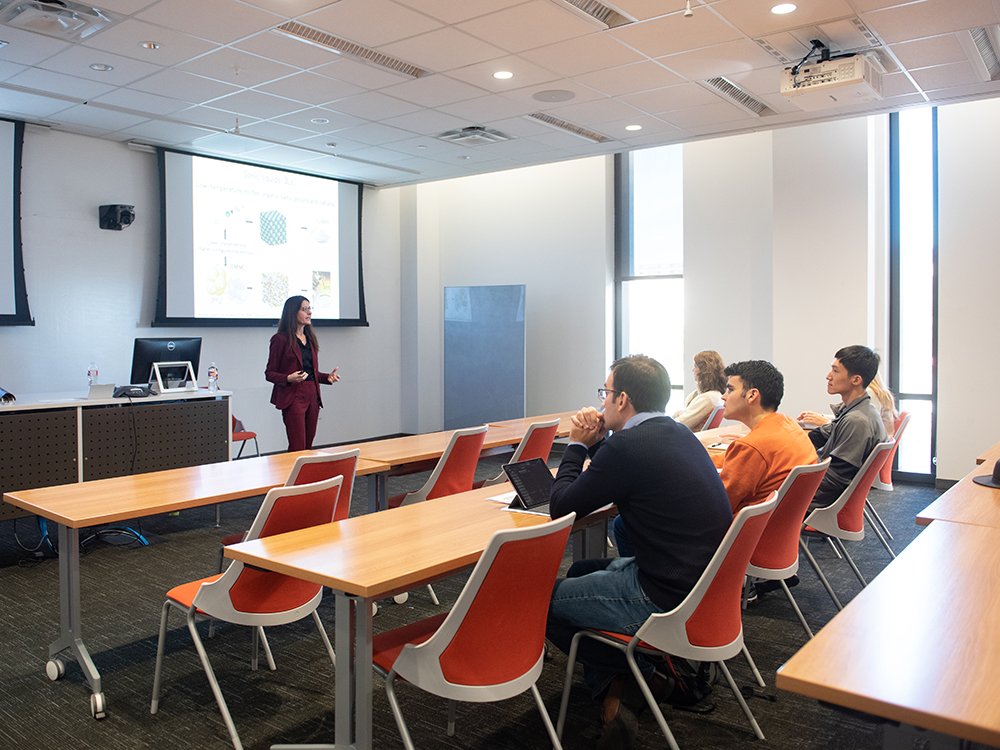
Research
TMI supports interdisciplinary research at UT Austin, with over 100 faculty focusing on clean energy, nanotechnology, and advanced materials using our state-of-the-art facilities.
Learn More
Equipment
Instrument Capabilities
The Quorum Technologies Polaron CPD7501 Critical Point Drier is used for controlled drying of delicate samples prior to microscopy and other materials characterization techniques. Typical applications include SEM sample preparation, biological and soft-material specimens, MEMS and microfabricated structures, porous and fragile materials, aerogels and other high-surface-area structures, and other samples where preservation of surface morphology and dimensional integrity is important.
Key features:
- Chamber capacity suitable for multiple small specimens. Dimensions: 29 mm internal diameter × 56 mm tall
- Stacking holder with increased capacity to eight specimen baskets
- Vertical pressure chamber designed for efficient solvent drainage
- Built-in thermoelectric heating and cooling
- Viewing window for monitoring the fluid level and drying process
- Dedicated inlet, flushing, and controlled gas-venting functions
- Fine control of CO₂ venting to minimize specimen damage
Fees and Policies
- UT Users: $35/hour
- Higher Education/State Agencies (Assisted): $92/hour
- Corporate/External Users (Assisted): $94/hour
- Higher Education/State Agencies (Unassisted): $64/hour
- Corporate/External Users (Unassisted): $65/hour
A cleanroom entry fee will be charged in addition to the cleanroom facility usage fee.
- UT Users $6
- Higher Education/State Agencies: $10
- Corporate/External Users: $10
Traning
Please contact James Smitherman to schedule a training session.
Instrument Capabilities
The Kurt J. Lesker PVD75 is a versatile thin-film deposition system designed for the deposition of metal and oxide films. The system supports multiple deposition techniques, including electron-beam (e-beam) evaporation, DC sputtering, and RF sputtering. This flexibility allows a wide range of materials to be deposited and provides researchers with control over film composition, thickness, and deposition conditions.
Key Features:
- Process control: Automated process control using eKLipse software
- Base pressure: 5.0 × 10⁻⁷ Torr
- Substrate handling:
- Substrate rotation up to 20 rpm
- Water-cooled substrate holder
- Pneumatically actuated substrate shutter
- Accommodates substrates up to 150 mm (6 inches) in diameter
- Film thickness monitoring: Two quartz crystal sensors for real-time film thickness monitoring
E-Beam Evaporation
- E-beam source: 8-pocket source with 12 cc pockets
- Source shutter: Included
- Substrate-to-source distance: Approximately 15 inches
- Suitable for deposition of a wide range of metal and other evaporated films
Sputtering
- DC sputtering: Two DC sputtering sources, with capability for co-deposition
- RF sputtering: One RF sputtering source
- Substrate-to-source distance: Typically 4–6 inches, manually adjustable
- Operating pressure: Low-pressure operation down to ≥0.5 mTorr, depending on the material
- Targets: Accommodates non-magnetic targets up to 3 inches in diameter and 0.375 inches thick
- Tilt capability: Included for additional control of the deposition geometry
- Shutters: Included to reduce cross-contamination between materials
- Process gases: Up to four gases, with flow rates from 0–20 sccm
Fees and Policies
- UT Users: $35/hour
- Higher Education/State Agencies (Assisted): $92/hour
- Corporate/External Users (Assisted): $94/hour
- Higher Education/State Agencies (Unassisted): $64/hour
- Corporate/External Users (Unassisted): $65/hour
A cleanroom entry fee will be charged in addition to the cleanroom facility usage fee.
- UT Users $6
- Higher Education/State Agencies: $10
- Corporate/External Users: $10
Traning
Users should register for the required in-person training course through UTLearn.
Instrument Capabilities
The Oxford PlasmaLab 80 is a versatile plasma-processing system that combines etching and thin-film deposition in one tool. It can perform high-aspect-ratio silicon etching using either Bosch (gas-chopping) or cryogenic processes. The system can also deposit high-quality silicon dioxide, silicon nitride, and oxynitride films at room temperature, making it suitable for temperature-sensitive plastic and organic substrates. It accommodates wafers up to 8 inches, with processing concentrated in the central 4-inch region of the chamber.
Key Features:
- Available gases:
- N₂, N₂O, O₂, SF₆, and Ar: maximum flow rate of 100 sccm
- C₄F₈, SiH₄, and CH₄: maximum flow rate of 20 sccm
- RF power: 300 W
- ICP power: 300 W
- Process pressure: 4–100 mTorr
- Substrate temperature: Controllable from −150 to 200 °C
- Capabilities: Supports both material growth (deposition) and plasma etching
The wide range of available process gases, combined with independently controlled RF and ICP power, pressure control, and a broad substrate-temperature range, provides significant flexibility for developing both etching and thin-film deposition processes.
Fees and Policies
- UT Users: $35/hour
- Higher Education/State Agencies (Assisted): $92/hour
- Corporate/External Users (Assisted): $94/hour
- Higher Education/State Agencies (Unassisted): $64/hour
- Corporate/External Users (Unassisted): $65/hour
A cleanroom entry fee will be charged in addition to the cleanroom facility usage fee.
- UT Users $6
- Higher Education/State Agencies: $10
- Corporate/External Users: $10
Traning
Please contact Dr. Raluca Gearba and/or James Smitherman to schedule a training session.
Instrument Capabilities
The Nano36 thermal deposition system from Kurt J. Lesker enables thermal deposition of metals onto substrates up to 150 mm in diameter.
Key Features:
- Automated process control: KJL eKLipse software with a graphical recipe builder.
- Deposition sources: Two thermal sources for co-deposition and four sources for sequential deposition.
- Source characteristics: DC power supply rated up to 12 V or 400 A, with a maximum applied power of 2 kW.
- Shutters and shielding: Substrate and source shutters with cross-contamination shields.
- Substrate rotation: Up to 20 rpm.
- Thickness monitoring: Two crystal sensors with controller-based deposition rate and film thickness control.
- System base pressure: 5.0 × 10⁻⁶ Torr.
- Film uniformity: <8%.
Fees and Policies
- UT Users: $35/hour
- Higher Education/State Agencies (Assisted): $92/hour
- Corporate/External Users (Assisted): $94/hour
- Higher Education/State Agencies (Unassisted): $64/hour
- Corporate/External Users (Unassisted): $65/hour
A cleanroom entry fee will be charged in addition to the cleanroom facility usage fee.
- UT Users $6
- Higher Education/State Agencies: $10
- Corporate/External Users: $10
Traning
Please contact Dr. Raluca Gearba and/or James Smitherman to schedule a training session.
Texas Materials Seminar Series
The Texas Materials Seminar Series features MSE 397 Seminars, TMI Distinguished Lectureships, and TMI Special Seminars, where leading faculty and professionals from around the world share cutting-edge innovations and advancements in materials engineering with our students.
Learn More
$12M+
In Grant Funding
20+
Research Patents
10K+
Sq. Ft. of Research Labs
News
Zhantao Chen Publishes New Article on AI-assisted Tool
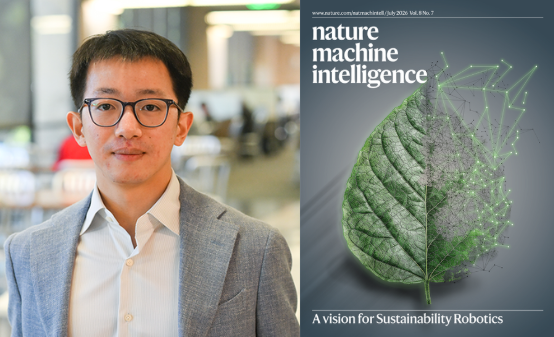
Zhantao Chen, an Assistant Professor in Mechanical Engineering and a TMI-affiliate, has published an article on an AI tool in Nature Machine Intelligence. The article used AI to help researchers in ways that would assist in experimental tasks that are often labor-intensive and tiresome.
Terry Zheng & Yu Group Publish New Work on Water-Based Electrolytes
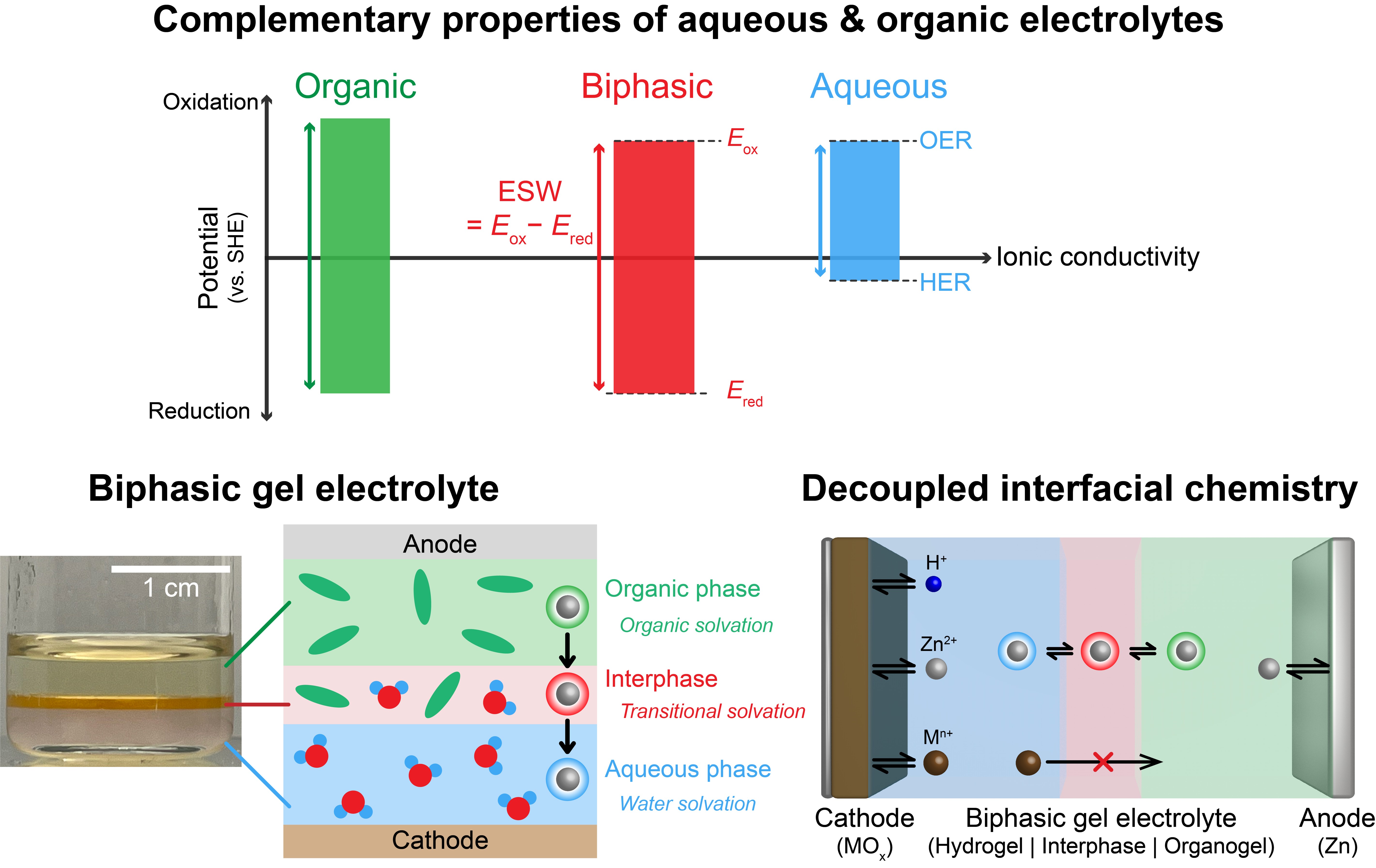
Materials Science and Engineering graduate student Tianrui (Terry) Zheng, under the supervision of Dr. Guihua Yu has published research in Advanced Materials introducing a biphasic electrolyte architecture that combines the strengths of water-based (aqueous) and organic-based electrolytes for long-duration, high-rate zinc metal batteries.
Get Better Sleep With Ultrasound Patch That Boosts REM Rest
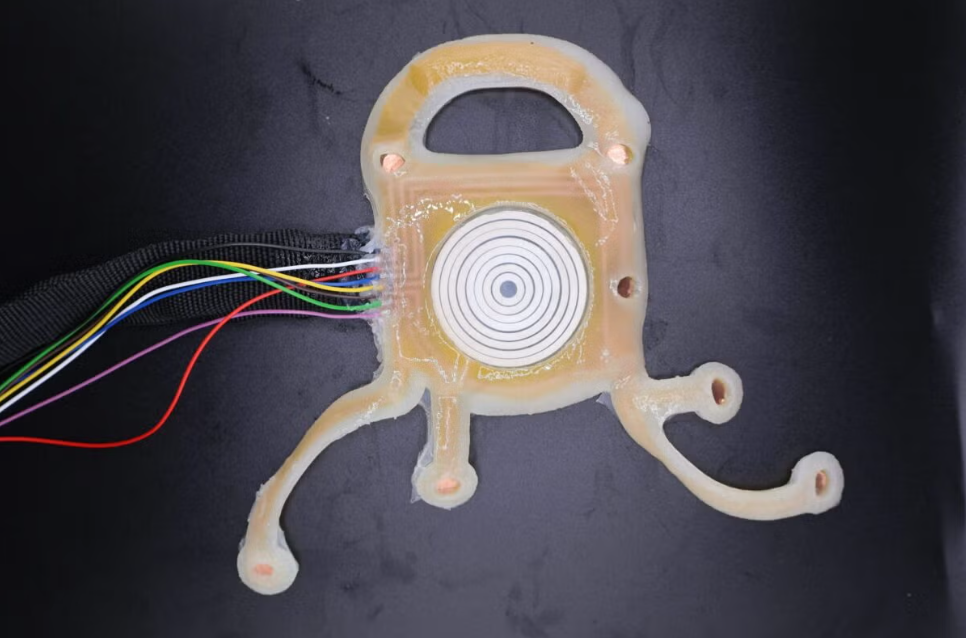
A wearable bioelectronic device increased REM sleep in real-world trials, without invasive surgery or medication.
Published by UT News.
Yuebing Zheng Awarded 'New Directions' Seed Funding from UT OVPR

Yuebing Zheng was awarded seed funding through the University's Office of the Vice President for Research, Scholarship and Creative Endeavors. The 'New Directions in Research' grants are one time payments that give faculty an opportunity to obtain proof-of-concept or pilot data for future, larger grants.
Terry Zheng Awarded UT Chevron Energy Graduate Fellowship
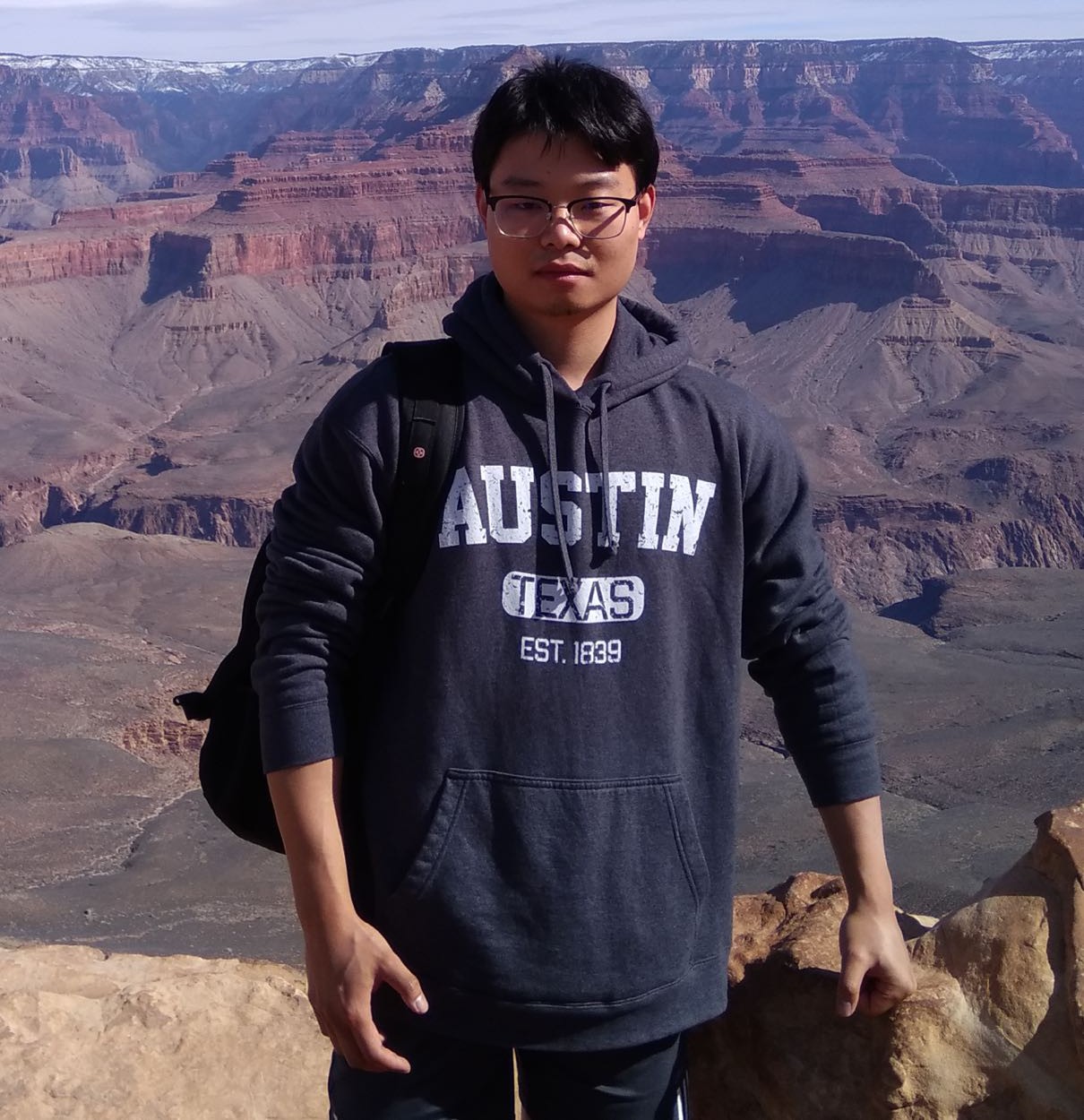
Tianrui (Terry) Zheng, a Materials Science & Engineering graduate student working with Dr. Guihua Yu, is a recipient of the 2026-2027 UT Chevron Energy Graduate Fellows Award from UT's Energy Institute.
