
Video showing students and faculty in the Materials Science and Engineering department engaged in research, lab work, and classroom activities.
Home of UT
Materials Science and
Engineering
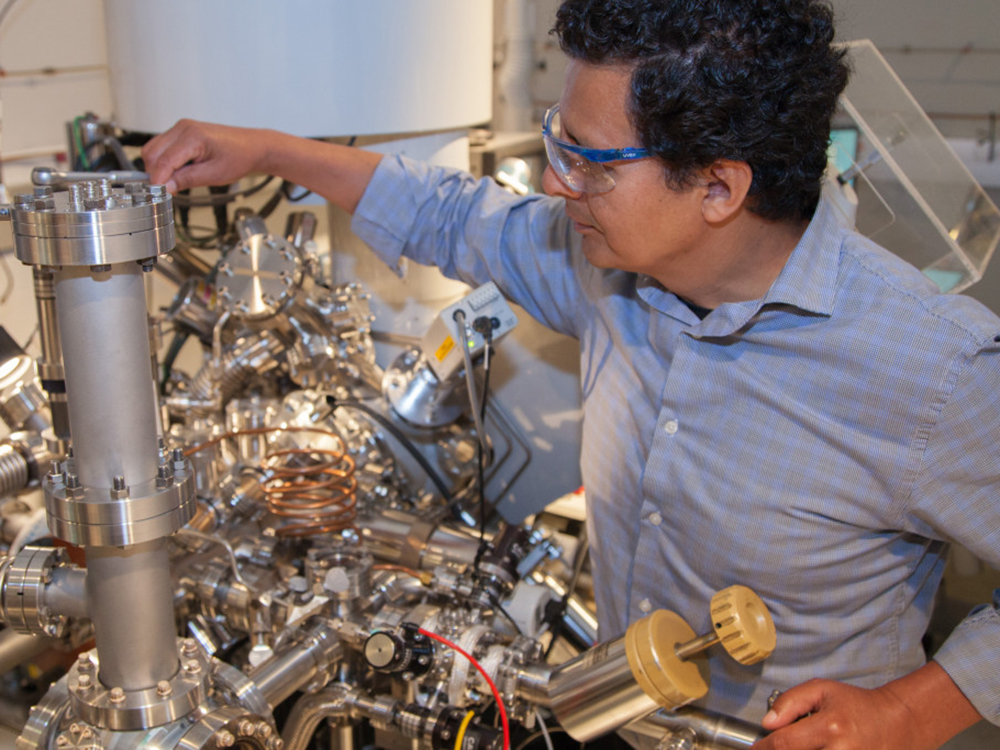
Core Faculty
TMI's core faculty lead cutting-edge research by running their grants through the institute, fostering collaboration and resource sharing.
Learn More
Graduate Program
Our Materials Science and Engineering program is one of the best in the nation, and our graduates go on to be leaders in their fields.
Learn More
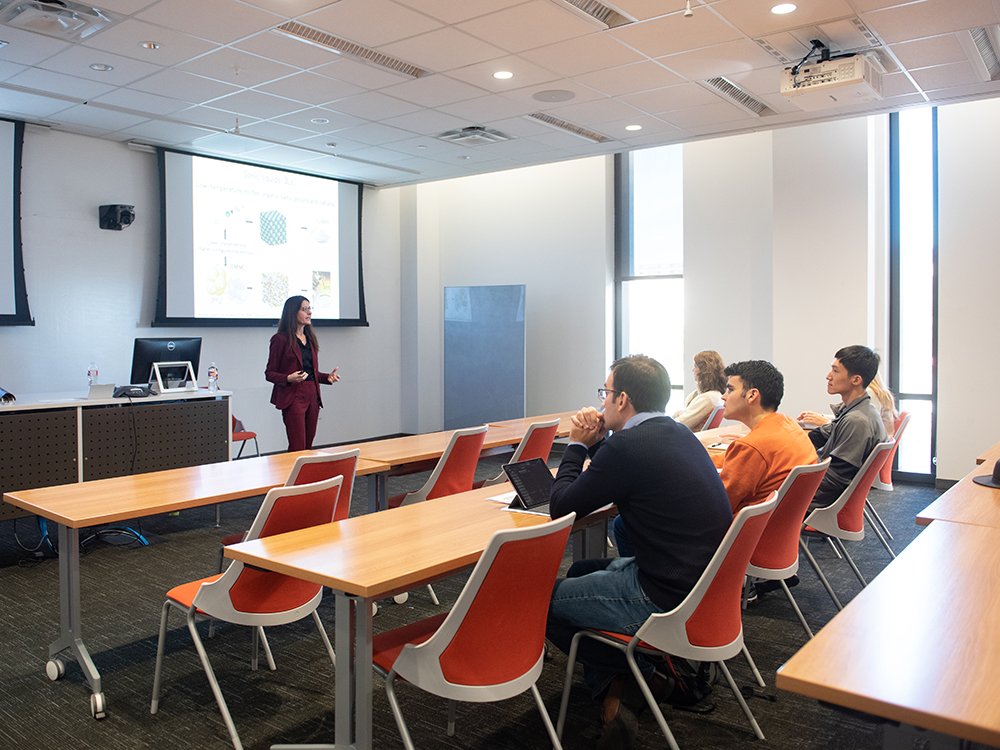
Research
TMI supports interdisciplinary research at UT Austin, with over 100 faculty focusing on clean energy, nanotechnology, and advanced materials using our state-of-the-art facilities.
Learn More
Equipment
Instrument Capabilities
The NX10 Atomic Force Microscope (AFM) is equipped with a variety of imaging modes which include:
- Standard modes:
- Contact and LFM
- Tapping mode
- F/D Spectroscopy and Force Volume Imaging
- Nanoindentaion
- SPECIAL: true Non-Contact AFM
- Magnetic Force Microscopy
- Scanning Ion Conductance Microscopy (SICM): lateral resolution 80-100 nm
- Electrical measurements: KPFM, PinPoint conductive AFM, I-V Spectroscopy, Electrostatic Force Microscopy
- Imaging in liquids (contact mode) coming soon!
Key features:
- The system is equipped with an acoustic enclosure. However, the system is operated more commonly inside an environmental enclosure where the oxygen and water can be controlled/monitored.
- Humidity control from 2 to 90%.
- O2 level in the 100 ppm range (working gas Ar and N2).
- Independent 2D flexure-guided XY scanner structure for sample scanning and positioning, separated from the topography feedback mechanism of the Z scanner. The Flexure-guided XY scanner is used to maintain zero background curvature.
- 100 μm by 100 μm scan area with closed looped position control.
- Z range of 15 μm
- Sample size: up to 100 × 100 mm (less than 50 × 50 mm recommended), 20 mm thickness
- Includes a magnetic sample holder
- Motorized XY scanner with a travel range of 20 by 20 mm, step 0.6 microns
- Motorized Z stage with a travel range of 22 mm, step 0.08 microns
- Temperature controlled stage from ambient up to 250°C (sample size 18 by 18 mm)
Fees and Policies
- UT Users: $27/hour
- Higher Education/State Agencies: $76/hour
- Corporate/External Users: $76/hour
Traning
Users should register for the required in-person training course through UTLearn.
Information the Equipment Can Provide
The Asylum MFP-3D atomic force microscope (AFM) is equipped with a variety of imaging modes which include:
- Contact mode: imaging using feedback on deflection; Height, deflection and lateral force signals available
- AC or tapping Mode: Q-controlled imaging using feedback; Height, amplitude/phase, deflection signals available
- Force Mode: Force curve acquisition in Contact or AC mode
- Lateral Force: Frictional force imaging
- Kelvin Force Probe Microscopy
- Magnetic Force Microscopy
- Electrical Force Microscopy
- The system is also equipped an electrochemistry cell which enables studies of deposition, oxidation, corrosion, and mass transfer of metals and other materials. Nanoscale topographical changes can be precisely monitored in situ as induced by electro-chemical reactions. The cell provides for heating from ambient to 60°C and can be operated in a fully sealed configuration.
Features
- 90 μm by 90 μm scan area with closed looped position control
- Z range of 15 μm; the z range can be extended to 40 μm with optional head extended
- Vertical noise of ~0.5 Å RMS
- Sample holder for samples up to 3.4″x1.5″, including glass slides and cover slips.
- Open user interface based on IGOR Pro incorporates professional-quality analysis and graphing capabilities. AFM analysis includes section, histogram, roughness, particle analysis, and masking.
- Top view head which allows for high resolution optical imaging of tip and sample.
Fees and Policies
- UT Users: $17/hour
- Higher Education/State Agencies: $40/hour
- Corporate/External Users: $40/hour
To become a new user of this facility, please read the Instrument Reservation Information page. If you are already a user you can make a reservation in FBS.
Instrument Capabilities
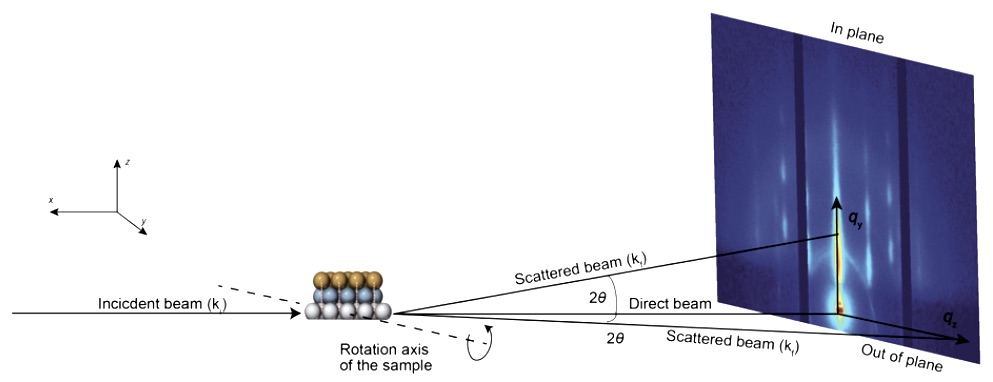
The SAXSLab Ganesha System is small- and wide-angle X-ray scattering instrument for characterization of nanoscale structure, including particle size, interparticle spacing, domain dimensions, aggregation, and periodic structures in bulk materials, thin films, and dispersions. The system accommodates both transmission and grazing-incidence geometries.
Transmission small‑angle X‑ray scattering (SAXS) is a powerful method to gather quantitative nanoscale information from a diverse range of samples from liquids to pastes, powders, and films. The typical length scales probed range from ~1‑100 nm, corresponding well to the typical feature sizes of nanoparticles, block copolymers, and proteins. This versatility enables characterizations of diverse samples including nanoparticle solutions, nanocomposites, block copolymers, mesoporous materials, and protein solutions.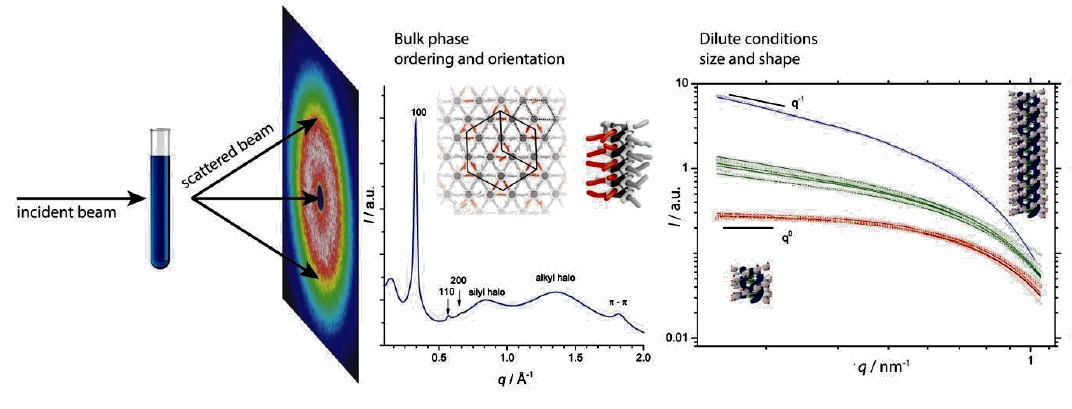
Glancing Incidence small-angle scattering (GISAXS) allows for examination of thin film materials by shallow illumination of films grown on otherwise x-ray opaque substrates. By adjusting incidence angle, scattering and diffraction information can be obtained from the surface of the film as well as the entire thickness of the film.
Key features:
- The Ganesha SAXSLAB 300 XL+ is equipped with a microfocus X-ray source with a spot size of 20 μm.
- The instrument is capable of instrument of interrogating the structure and structural evolution of materials over multiple length scales, with feature sizes of 0.2 nm up to 179 nm.
- Rail-mounted Pilatus 300K detector with 487 × 619 electronics-independent pixels, and a high dynamic range from 4 x 10⁻⁵ to 3 x 10⁶ count rate per pixel.
- Motorized sample stage with a 2 μm step size
- Capillary heater/cooling block with a range from -20°C to 80°C and 0.1°C precision for measuring both solids and liquids.
- Linkam stage with an accessible temperature range between -196°C to 600°C for solids and liquids alike.
- Environmental chamber for working under gases as well as solvent vapors and can hold an internal pressure from vacuum to 2 atm.
Fees and Policies
- UT Users: $9/hour
- Higher Education/State Agencies: $59/hour
- Corporate/External Users: $59/hour
Traning
Users should register for the required in-person training course through UTLearn.
TMI-XRD: Introduction to Xenocs GISAXS
TMI-XRD: Introduction to Xenocs SAXS
Information the Equipment Can Provide
Coming Soon
Fees and Policies
- UT Users: $18/hour
- Higher Education/State Agencies: $61/hour
- Corporate/External Users: $110/hour
Traning
Please contact
Texas Materials Seminar Series
The Texas Materials Seminar Series features MSE 397 Seminars, TMI Distinguished Lectureships, and TMI Special Seminars, where leading faculty and professionals from around the world share cutting-edge innovations and advancements in materials engineering with our students.
Learn More
$12M+
In Grant Funding
20+
Research Patents
10K+
Sq. Ft. of Research Labs
News
Zhantao Chen Publishes New Article on AI-assisted Tool
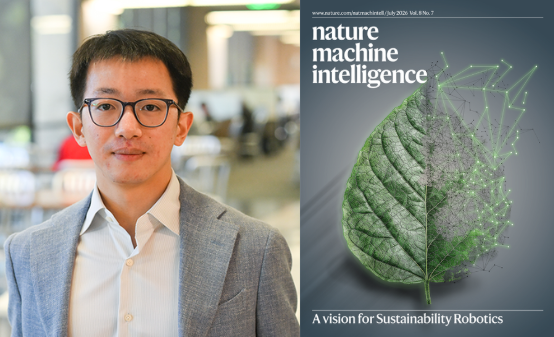
Zhantao Chen, an Assistant Professor in Mechanical Engineering and a TMI-affiliate, has published an article on an AI tool in Nature Machine Intelligence. The article used AI to help researchers in ways that would assist in experimental tasks that are often labor-intensive and tiresome.
Terry Zheng & Yu Group Publish New Work on Water-Based Electrolytes
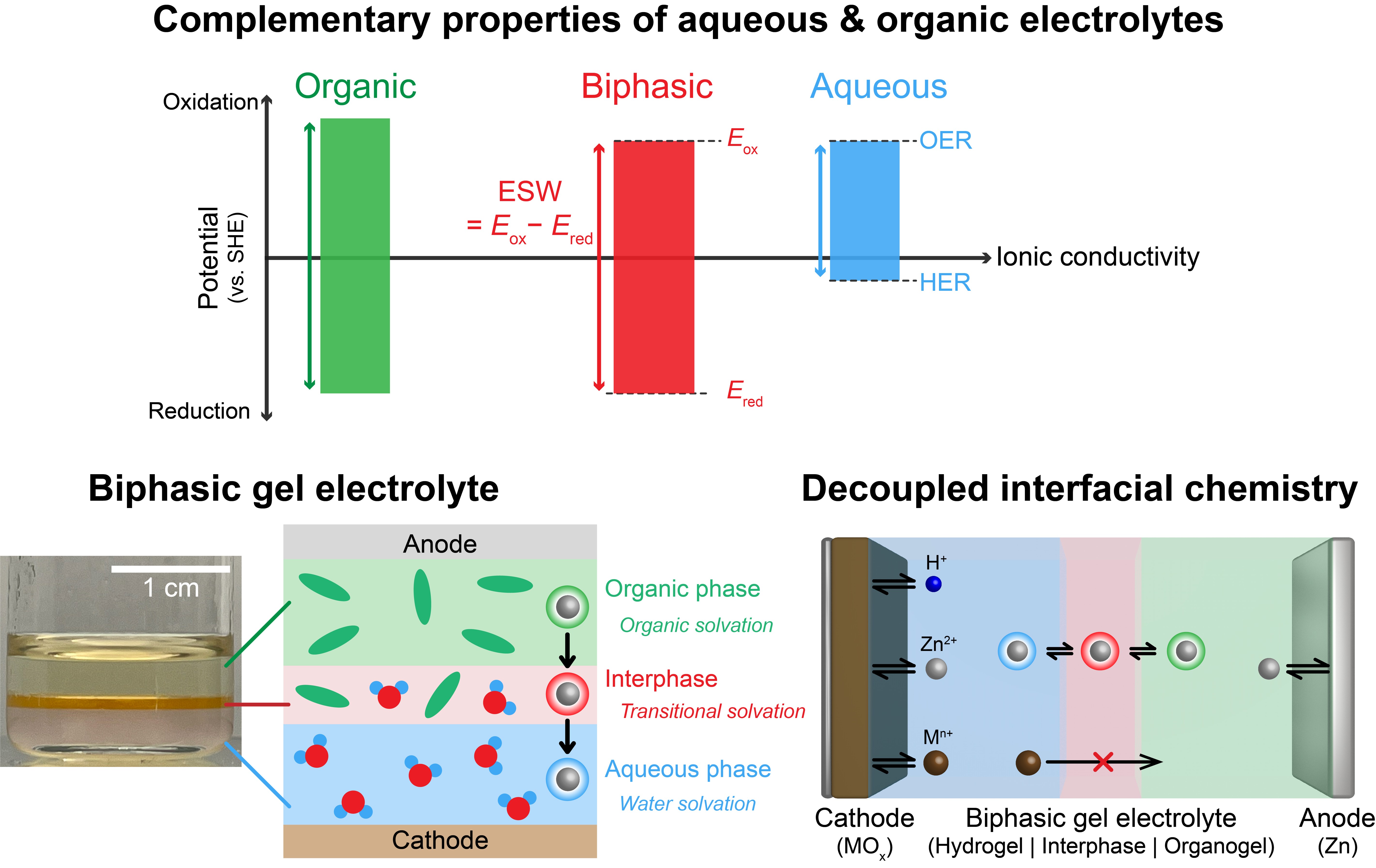
Materials Science and Engineering graduate student Tianrui (Terry) Zheng, under the supervision of Dr. Guihua Yu has published research in Advanced Materials introducing a biphasic electrolyte architecture that combines the strengths of water-based (aqueous) and organic-based electrolytes for long-duration, high-rate zinc metal batteries.
Get Better Sleep With Ultrasound Patch That Boosts REM Rest
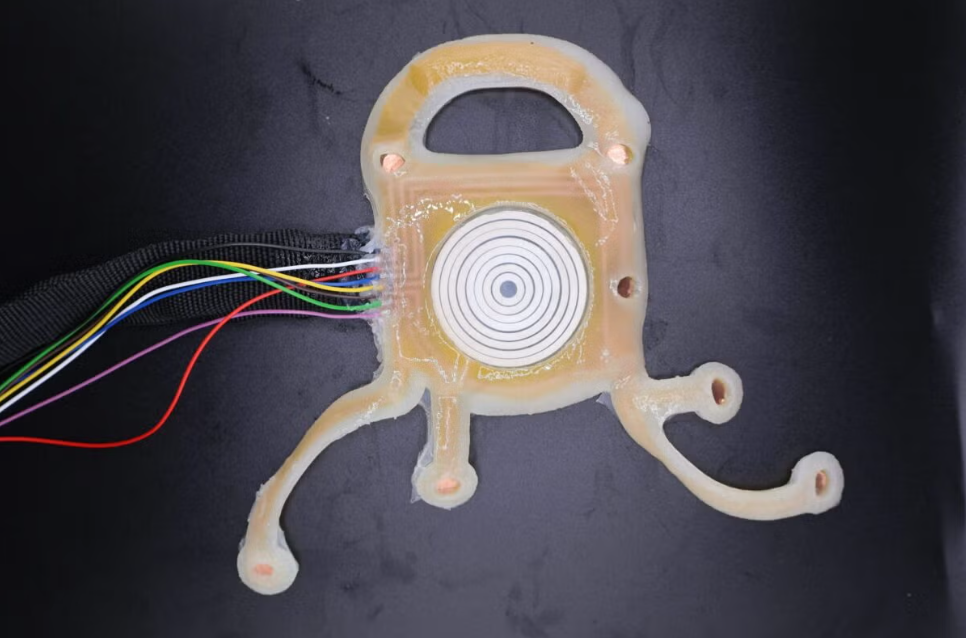
A wearable bioelectronic device increased REM sleep in real-world trials, without invasive surgery or medication.
Published by UT News.
Yuebing Zheng Awarded 'New Directions' Seed Funding from UT OVPR
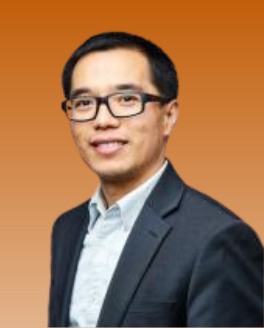
Yuebing Zheng was awarded seed funding through the University's Office of the Vice President for Research, Scholarship and Creative Endeavors. The 'New Directions in Research' grants are one time payments that give faculty an opportunity to obtain proof-of-concept or pilot data for future, larger grants.
Terry Zheng Awarded UT Chevron Energy Graduate Fellowship
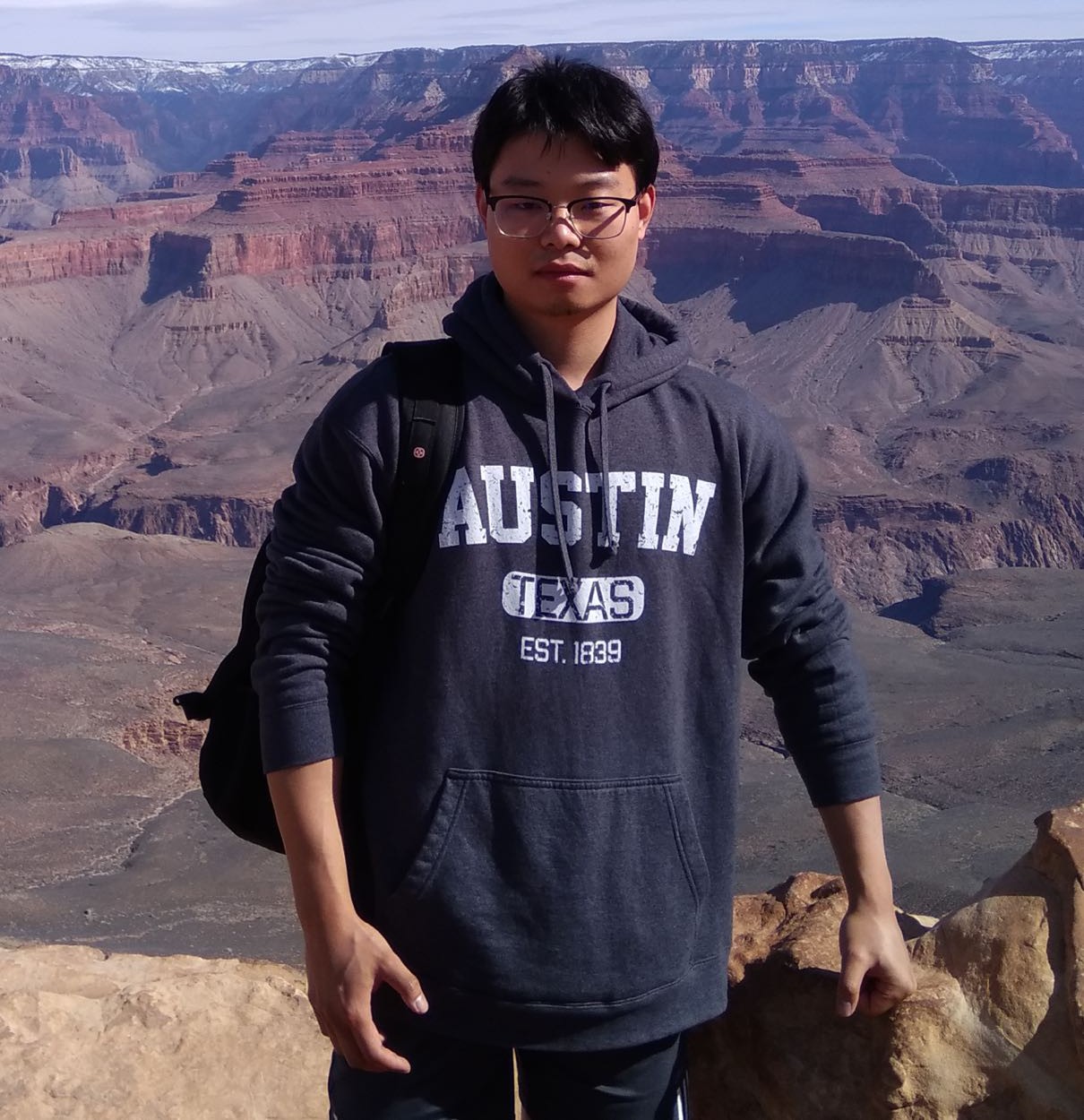
Tianrui (Terry) Zheng, a Materials Science & Engineering graduate student working with Dr. Guihua Yu, is a recipient of the 2026-2027 UT Chevron Energy Graduate Fellows Award from UT's Energy Institute.
